On birch trunks across the colder parts of the Northern Hemisphere grows something that looks more like charred wood than a fashionable food ingredient. Chaga (Inonotus obliquus) is a parasitic fungus that has a long history of traditional use in northern regions and has become a familiar name in the modern functional-food world.
Its appeal is easy to understand: chaga connects forest tradition, a distinctive origin story and a chemically complex raw material. But good functional nutrition starts by separating an interesting ingredient from exaggerated promises.
What exactly is chaga?
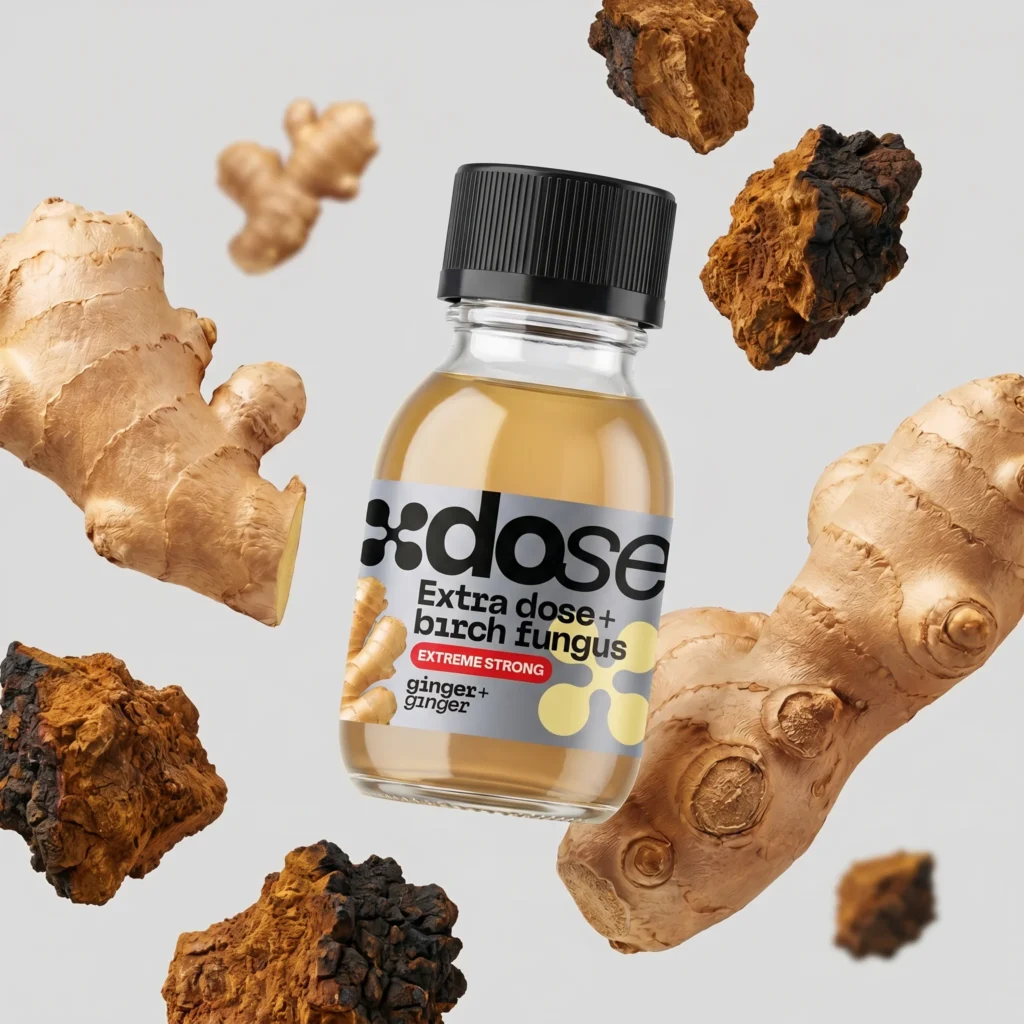
Chaga develops mainly on birch trees in cold climates. The dark, irregular mass commonly harvested is not a conventional mushroom cap; it is a hardened fungal structure often called a sclerotium. Its black outer surface contains melanin-rich material, while the interior is brown to orange-brown.
Researchers have identified several groups of compounds in chaga, including polysaccharides, phenolic compounds and triterpenoid-related constituents. Fungal beta-glucans are particularly interesting in nutrition science, although their biological behaviour depends strongly on source, molecular structure, solubility and processing. That means the word “beta-glucan” alone does not tell the whole story.
Tradition is not the same as proof
Chaga has been used traditionally in infusions and folk preparations, especially in parts of Northern and Eastern Europe and Asia. Modern laboratory research has explored antioxidant, immunological and other biological activities. However, laboratory activity is not the same thing as a demonstrated benefit in humans.
This distinction matters. A premium functional product should not need miracle language. The more interesting story is that chaga is a genuinely unusual northern ingredient whose chemistry is still being studied.
Why processing matters
A forest ingredient is only the beginning. Extraction method, temperature, particle size, standardisation, microbiological quality and storage can all influence the final raw material. Two ingredients sold simply as “chaga” can therefore be very different.
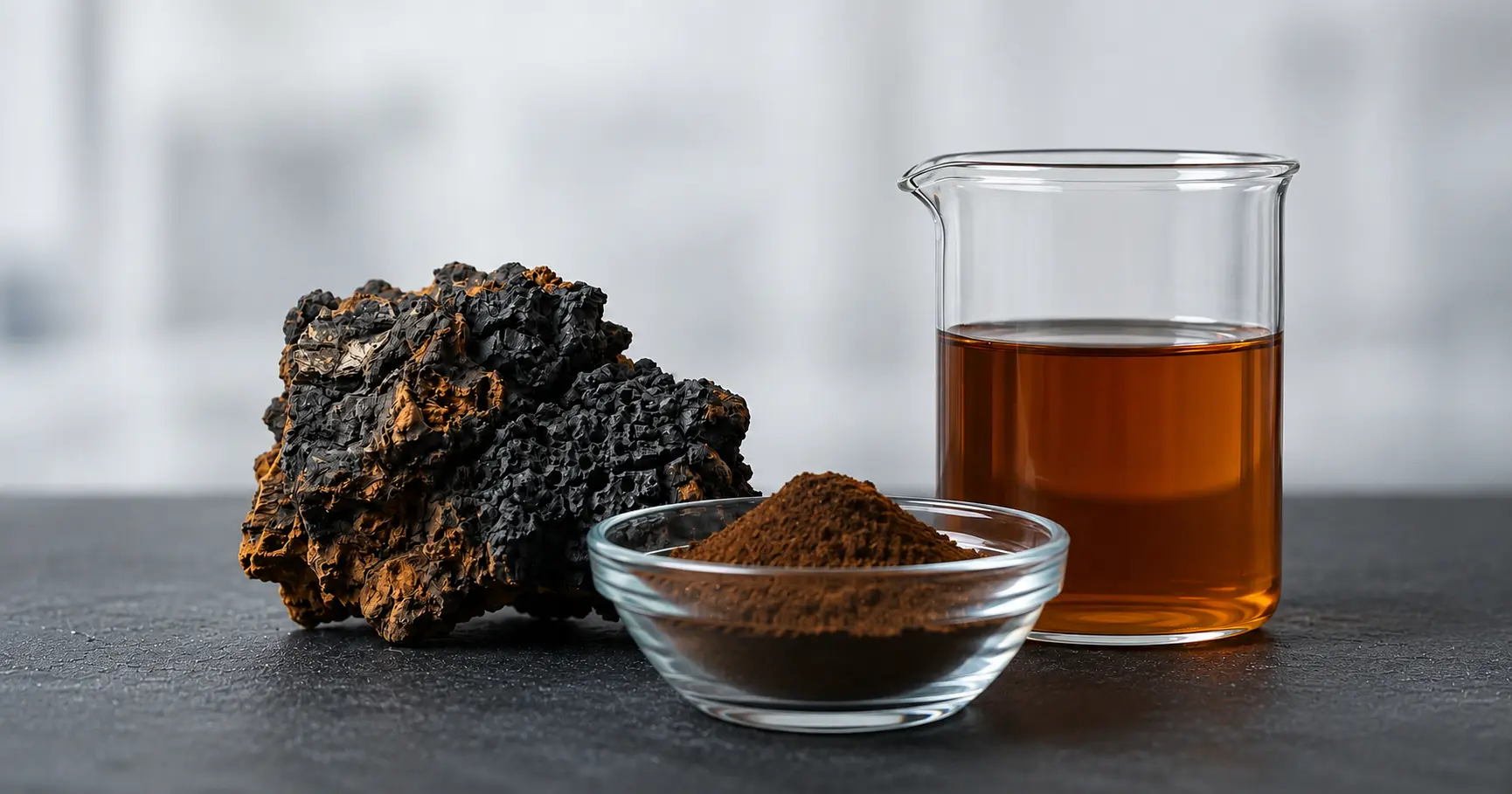
For beverage development, there is another layer: taste, colour, sedimentation and compatibility with acidic fruit systems. A technically impressive extract that makes a drink unpleasant is not automatically a good ingredient. Function and sensory quality have to work together.
A northern ingredient for modern formulations
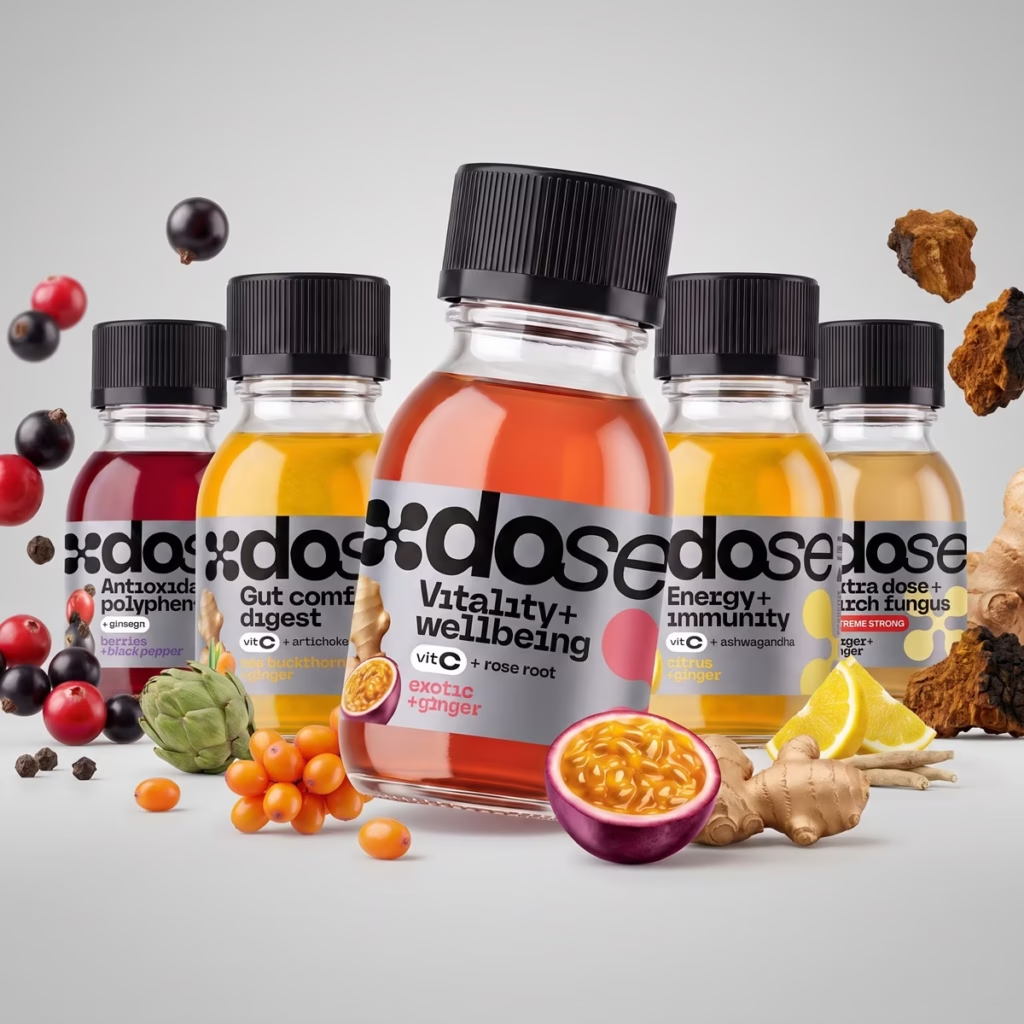
At xdose, we are interested in ingredients that have both a credible story and a reason to exist in a contemporary formulation. Chaga fits naturally into that conversation. It represents the meeting point between northern forests, traditional use and modern ingredient technology.
The responsible way to talk about chaga is not to claim that one small serving can transform health. It is to understand the raw material, choose it carefully, formulate it intelligently and keep following the science.
The xdose view
Nature can be powerful without being mystical. We prefer ingredients with identity, traceability and a body of scientific interest — and we communicate the difference between what is known, what is promising and what remains to be proven.